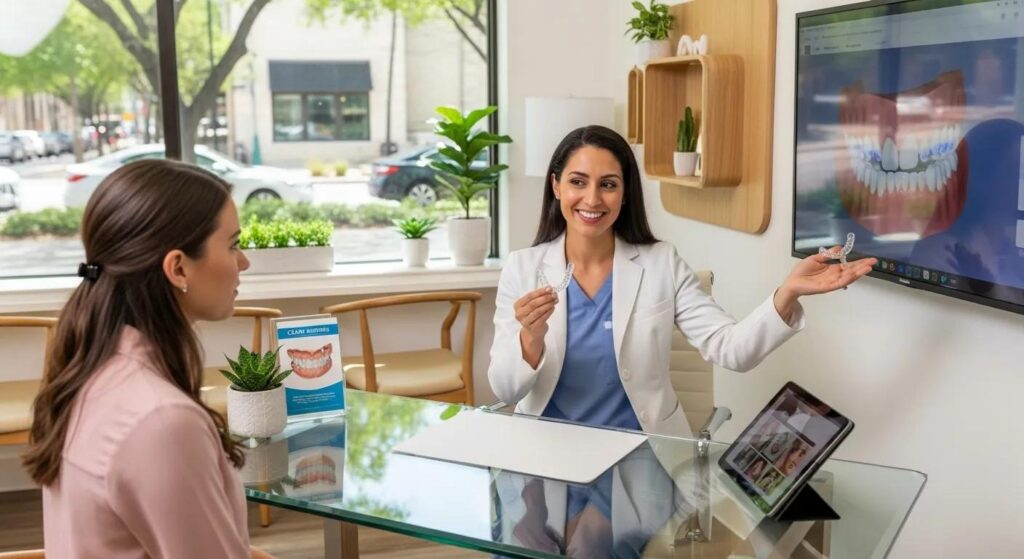
Invisalign has changed how people straighten teeth — it’s discreet, effective, and fits into busy lives. If you’re in Austin and wondering how soon you can see results, this guide walks through typical timelines, the key factors that speed or slow treatment, and the newest tools that can shorten your journey. Knowing what affects your timeline helps you set realistic expectations and pick the right approach. We’ll also explain how providers offering Invisalign in Austin use advanced methods to help patients reach their goals more efficiently.
What Is the Typical Invisalign Treatment Duration in Austin?
Most Invisalign treatments in Austin fall between 12 and 18 months. For straightforward corrections, many people finish in about 6 to 12 months. More involved cases — with significant crowding or bite work — can stretch to 18–24 months. The exact timeline depends on the issue being treated and how closely a patient follows their plan.
How Long Does Invisalign Usually Take for Children, Teens, and Adults?
Treatment times differ by age and dental development. Children can often move faster because their teeth and jaws are still growing. Teens frequently have timelines similar to adults but sometimes progress quicker as their mouths are still changing. Adults may need more time if corrective work addresses long-standing alignment or bite problems.
Which Factors Affect the Speed of Invisalign Teeth Straightening?
Several things influence how fast Invisalign moves your teeth:
- Case Complexity: The more complex the movement required, the longer treatment usually takes.
- Patient Compliance: Wearing aligners as recommended is one of the biggest drivers of timely results.
- Individual Response: Everyone’s teeth respond differently; biology and bone density can affect pace.
Understanding these factors helps you plan and avoid surprises during treatment.
How Do Patient Age and Orthodontic Complexity Impact Treatment Time?
Age and the specific orthodontic issues at hand play a major role. Younger patients often respond faster because their jaws and teeth are more adaptable. In contrast, adults with long-standing crowding, missing teeth, or bite problems may need additional time or combined treatments. Your orthodontist will assess growth, tooth movement potential, and overall dental health to estimate a personalized timeline.
Can Accelerated Orthodontics Reduce Invisalign Treatment Duration in Austin?
Accelerated orthodontics aims to shorten treatment using targeted techniques. Options like micro-osteoperforation (MOP) and vibration devices can encourage faster tooth movement in some patients. These approaches show promise, but they aren’t right for everyone — a specialist can help decide whether acceleration is safe and effective for your case.
What Accelerated Invisalign Treatment Options Are Available in Austin?
In Austin, patients may have access to several acceleration strategies, including:
- Micro-Osteoperforation: Small, targeted perforations in the bone to stimulate faster movement.
- Vibration Devices: Gentle vibration tools that can help teeth shift more quickly.
- Customized Treatment Plans: Tailored workflows and technology-driven protocols to maximize efficiency.
Clinical research supports the idea that MOPs can reduce the time between tray changes in certain protocols, though results vary by patient.
Micro-Osteoperforations Accelerate Invisalign Tray Changes
Study subjects were randomly assigned to two groups: a control group that followed conventional Invisalign tray changes every 7 days, and a test group that received micro-osteoperforations (MOPs) and changed trays every 3 days.
EFFECTS OF THE INNOVATIVE MINIMALLY INVASIVE METHOD OF ORTHODONTIC TREATMENT ACCELERATION ON THE PERIODONTAL CONDITIONS, 2020
Talk with an orthodontist about whether accelerated techniques are appropriate for your teeth and goals.
How Does Thousand Smiles Orthodontics Offer Faster Invisalign Treatments?
Thousand Smiles Orthodontics combines non-invasive options and modern technology to streamline Invisalign care. Their process starts with a detailed assessment and a customized plan focused on predictable, efficient movement. Using digital tools and patient-centered workflows, they aim to shorten treatment time while maintaining comfort and safety.
What Are the Latest Advances in Invisalign Technology for Speed?
Recent advances make treatment smarter and often faster. Digital monitoring, refined aligner materials, and data-driven planning let clinicians fine-tune movements and reduce unnecessary office visits. Personalization — mapping movement to each patient’s biology — is becoming more common and can help accelerate results when applied appropriately.
Studies also show that remote monitoring tools can cut down on in-office appointments without negatively affecting outcomes.
Digital Monitoring Reduces Invisalign Office Visits
In one study, the group using digital monitoring averaged 7.56 appointments versus 9.82 for the control group — about a 23% reduction in visits. There were no significant differences between the groups in overall treatment duration or number of refinements.
Clinical outcomes and patient perspectives of Dental Monitoring® GoLive® with Invisalign® — a retrospective cohort study, NR Vaid, 2020
Is Invisalign Suitable for Children, Teens, and Adults in Austin?
Yes — Invisalign can work for many ages. For children, it can guide development; teens like the discreet look; and adults appreciate the convenience and professional appearance. Each treatment is customized to fit the needs and lifestyle of the patient.
What Are the Benefits of Invisalign for Different Age Groups?
Invisalign delivers age-specific advantages:
- Children: Supports guided development and can prevent future problems.
- Teens: Clear, low-profile aligners that suit an active, social lifestyle.
- Adults: A discreet, convenient option that fits work and family life.
These benefits make Invisalign a flexible choice across life stages.
How Does Treatment Duration Vary by Patient Age?
Younger patients often move through treatment faster because of growth and greater tooth mobility. Older patients may need longer timelines if their issues are more complex or established. Your orthodontist will factor age, dental health, and treatment goals into an individualized estimate.
How Much Does Invisalign Cost in Austin, TX, and What Financing Options Exist?
Invisalign in Austin generally ranges from $3,500 to $8,000, depending on case complexity and length of care. Many practices offer financing to spread costs out, and some insurance plans may cover part of treatment. Talk to your provider about payment options that fit your budget.
| Financing Plan | Description | Benefit |
|---|---|---|
| Flexible Payment Plans | Monthly installments tailored to your budget | Makes treatment more manageable |
| Low Down Payment Options | Initial payment options that reduce upfront costs | Lowers the initial financial barrier |
| Discounts for Full Prepayment | Reduced total cost for paying upfront | Saves money over the course of treatment |
These plans help many patients move forward with treatment without delaying care.
What Are Typical Invisalign Pricing Ranges in Austin?
Invisalign pricing in Austin is in line with other orthodontic treatments. Costs depend on the complexity of the case, treatment length, and the provider’s expertise. A consultation will give you a clearer estimate based on your individual needs.
Which Financing Plans Help Make Invisalign Affordable?
A few common financing options to look for:
- Flexible, Interest-Free Payment Plans: Spread payments over time without added interest when available.
- Low Down Payment Options: Start treatment with a smaller initial cost.
- Discounts for Full Prepayment: Pay upfront to reduce the overall price.
These choices give patients room to find a payment structure that works for them.
How Should I Care for My Teeth During and After Invisalign Treatment?
Good habits matter during and after treatment. Brush and floss regularly, clean your aligners as instructed, and keep scheduled visits so progress can be monitored. Store aligners in their case when not in use to avoid damage or loss.
What Are Best Practices for Clear Aligner Maintenance?
Follow these simple steps to keep aligners working well:
- Daily Rinsing and Gentle Cleaning: Rinse aligners and gently clean with a soft toothbrush to remove debris.
- Soaking Aligners: Use a recommended cleaning solution occasionally to refresh aligners.
- Avoid Hot Water and Food: Don’t expose aligners to heat while wearing them to prevent warping.
Proper care preserves aligner fit and supports consistent progress.
How Does Proper Aftercare Affect Treatment Speed and Results?
Aftercare directly affects both speed and outcome. Skipping wear time, missing check-ups, or neglecting hygiene can delay progress and require additional refinements. Regular follow-ups let your orthodontist make timely adjustments so treatment stays on course.
To schedule a consultation and explore your options, you can book an appointment with Thousand Smiles Orthodontics.
Frequently Asked Questions
What should I expect during my first Invisalign consultation?
Your first visit includes a full exam, digital imaging or 3D scans, and a discussion about goals and options. The orthodontist will explain the proposed plan, estimated timeline, and costs, and answer any questions so you leave with a clear next step.
Are there any dietary restrictions while using Invisalign?
There aren’t strict food bans, but you should remove aligners for any eating or drinking other than water. This prevents trapped food and reduces the risk of stains or decay. Brush before putting aligners back in for the best hygiene.
How often should I change my Invisalign aligners?
Most patients change aligners every one to two weeks, depending on the treatment plan set by the orthodontist. Following the recommended schedule is important for predictable movement and timely results.
Can I wear my aligners while playing sports?
In many cases yes, but wearing a mouthguard is a smart precaution for contact sports. Aligners are durable, but a mouthguard adds protection for both your teeth and the aligners during high-impact activities.
What happens if I lose or damage my aligners?
Contact your orthodontist right away. They may ask you to wear the previous set temporarily or order a replacement. Wearing damaged or ill-fitting aligners can slow progress, so prompt action keeps your treatment on track.
How can I ensure the best results from my Invisalign treatment?
Wear your aligners 20–22 hours a day, keep up with oral hygiene, and follow your orthodontist’s schedule for tray changes and check-ups. Consistency and communication with your provider are the best ways to reach your ideal smile efficiently.
Conclusion
Invisalign is a flexible, discreet option for straightening teeth, with timelines that reflect individual needs. By understanding the factors that affect speed and discussing accelerated or tech-enabled approaches with a specialist, many patients shorten their path to a confident smile. Connect with Thousand Smiles Orthodontics to get a personalized assessment and learn which options can help you reach your goals sooner. Schedule your consultation today to start the conversation.