Choosing orthodontic treatment involves much more than deciding how you want your smile to look. Most patients also want a treatment that fits comfortably into their daily routine, supports their oral health, and delivers lasting results. If you’re comparing aesthetic orthodontic options, you’ve probably come across both clear aligners and ceramic braces.
Understanding the differences between Angel Aligner vs Clear Ceramic Braces helps you make an informed decision before starting treatment. While many people search for Invisalign comparisons, Thousand Smiles Orthodontics proudly provides Angel Aligner, an advanced clear aligner system designed to treat a wide range of orthodontic concerns with comfort and precision.
At Thousand Smiles Orthodontics, Dr. Pan recommends treatment based on your smile, bite, and long term oral health rather than suggesting the same option for every patient. A personalized evaluation helps determine which treatment is most likely to provide healthy, predictable, and stable results.
How Do These Treatment Options Work?
Although both treatments gradually move teeth into healthier positions, they do so in different ways.
Understanding how each system works makes it easier to compare their advantages.
What Is Angel Aligner?
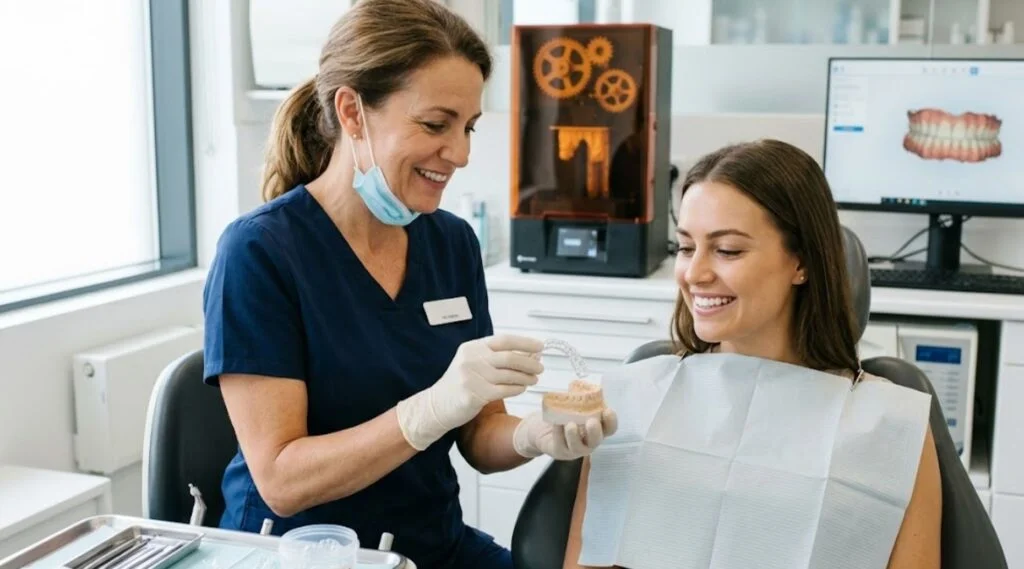
Angel Aligner is a clear aligner system that straightens teeth using a series of custom made transparent trays.
Each aligner is digitally designed to move your teeth a small amount before progressing to the next stage of treatment.
Patients often choose clear aligners because they offer several practical advantages:
- Nearly invisible appearance.
- Comfortable smooth plastic.
- Removable for meals.
- Easier brushing and flossing.
- Flexible daily routine.
Because the aligners are removable, they should generally be worn for 20 to 22 hours each day to keep treatment progressing as planned.
What Are Clear Ceramic Braces?
Clear ceramic braces work much like traditional braces but use tooth colored or translucent brackets that blend more naturally with your smile.
The brackets remain attached throughout treatment while orthodontic wires gradually guide the teeth into healthier positions.
For patients who need continuous tooth movement without relying on removable appliances, ceramic braces remain an excellent option.
Which Option Looks More Natural?
Appearance is one of the biggest reasons many adults and older teenagers compare these two treatments.
Angel Aligner is generally the more discreet option because the transparent trays fit closely over the teeth without brackets or wires.
Most people won’t notice you’re wearing aligners during everyday conversations, work meetings, or social events.
Clear ceramic braces are also designed to be less noticeable than traditional metal braces.
Because the ceramic brackets closely match the natural shade of your teeth, they blend in much better than stainless steel brackets.
However, the brackets and connecting wire remain visible at closer distances.
Patients looking for the most discreet orthodontic solution often ask about adult clear aligners during their consultation.
Which Treatment Feels More Comfortable?
Both treatments apply gentle pressure to move teeth, but the experience is different.
Angel Aligner uses smooth plastic trays that reduce irritation against the cheeks and lips.
When switching to a new aligner, it’s normal to experience mild pressure for the first day or two as your teeth begin moving.
Ceramic braces may require a short adjustment period after placement or routine adjustments because the brackets remain attached to the teeth throughout treatment.
Fortunately, today’s ceramic braces are smaller and more comfortable than older designs, making them easier to wear than many patients expect.
Which Treatment Is More Effective?
One of the biggest misconceptions is that one treatment is always better than the other.
In reality, the right choice depends on your orthodontic needs.
Angel Aligner is often recommended for patients with:
- Mild to moderate crowding.
- Small gaps.
- Minor bite concerns.
- Teeth that shifted after previous orthodontic treatment.
- Cosmetic smile improvements.
Clear ceramic braces may be recommended for patients with:
- Severe crowding.
- Significant tooth rotations.
- Complex bite correction.
- Multiple teeth requiring extensive movement.
Patients comparing orthodontic treatment choices often discover that the healthiest long term results come from selecting the treatment that’s most appropriate for their individual smile rather than simply choosing the least noticeable option.
How Do These Treatments Fit Into Everyday Life?
Your daily routine is just as important as your orthodontic needs when choosing between Angel Aligner and clear ceramic braces.
Eating and Drinking
One of the biggest advantages of Angel Aligner is the flexibility it offers during meals.
Since the aligners are removable, you can continue eating your favorite foods without worrying about damaging your appliance. After eating, simply brush your teeth before placing the aligners back in.
Clear ceramic braces stay attached to your teeth throughout treatment, so certain foods should be avoided to reduce the risk of broken brackets or bent wires.
Patients who prefer fewer food restrictions often ask about removable orthodontic treatment during their consultation.
Oral Hygiene
Keeping your teeth clean is essential regardless of which treatment you choose.
With Angel Aligner, brushing and flossing remain almost the same as your normal routine because the aligners are removed before cleaning your teeth.
Ceramic braces require extra care around the brackets and wires to remove food particles and plaque effectively.
Although the cleaning routine takes a little longer, consistent oral hygiene helps protect your teeth and gums throughout treatment.
Treatment Responsibility
One important difference between these options is patient responsibility.
Angel Aligner gives you the freedom to remove your aligners, but they should be worn for 20 to 22 hours each day to keep treatment progressing as planned.
Ceramic braces don’t rely on daily compliance because they remain attached throughout treatment and continue working all day.
How Often Will You Visit the Orthodontist?
Both treatment options require regular appointments so your progress can be monitored.
Patients using Angel Aligner often receive several sets of aligners at one visit before returning for their next progress evaluation.
Patients wearing ceramic braces generally return more frequently for wire adjustments that continue guiding tooth movement.
During every appointment, Dr. Pan carefully checks your progress and makes any adjustments needed to keep treatment moving safely and efficiently.
Many Austin patients first choose our office after reading community feedback, where local families share their orthodontic experiences and smile transformations.
Is Cost the Most Important Factor?
Cost is naturally part of the decision, but it shouldn’t be the only consideration.
The overall investment depends on:
- The complexity of your orthodontic condition.
- Estimated treatment time.
- Type of appliance recommended.
- Whether refinements are required.
- Your long term treatment goals.
Many patients find that choosing the treatment most appropriate for their smile provides greater long term value than focusing only on the initial price.
Patients who want to better understand treatment costs often discuss financing and payment options during their consultation.
Frequently Asked Questions
Is Angel Aligner better than clear ceramic braces?
Neither treatment is better for everyone. Angel Aligner is ideal for many patients seeking a discreet and removable solution, while ceramic braces may provide greater control for more complex orthodontic cases.
Which treatment is less noticeable?
Angel Aligner is generally the least noticeable because the transparent trays fit closely over the teeth. Ceramic braces are more discreet than traditional metal braces but remain visible at close range.
Are ceramic braces comfortable?
Yes. Modern ceramic braces are much smaller and smoother than older designs, although some patients may experience temporary irritation after adjustments.
Can adults choose either treatment?
Absolutely. Many adults are excellent candidates for both Angel Aligner and clear ceramic braces. Your orthodontist will recommend the option best suited to your smile and treatment goals.
How do I know which treatment is right for me?
A professional orthodontic evaluation is the best way to determine which treatment will provide the healthiest, most stable, and most predictable long term results.
Conclusion
Choosing between Angel Aligner vs Clear Ceramic Braces depends on more than appearance alone. Your bite, lifestyle, oral health, and orthodontic needs all play an important role in selecting the treatment that’s right for you. A personalized consultation ensures you receive recommendations based on your smile rather than a one size fits all approach.
At Thousand Smiles Orthodontics, Dr. Pan creates customized treatment plans using Angel Aligner and clear ceramic braces to help children, teens, and adults achieve healthy, confident smiles that last.
About the Reviewer
Dr. Pan Hiranpradit is the founder and orthodontic specialist at Thousand Smiles Orthodontics in North Austin. She completed advanced orthodontic training at New York University and has more than eight years of experience providing personalized orthodontic care with braces, clear ceramic braces, and Angel Aligner.